The Timeline of Laws That Molded Promotional Gaming as We Know It
Mara Hughes · Sep 6, 2026
The Timeline of Laws That Molded Promotional Gaming as We Know It
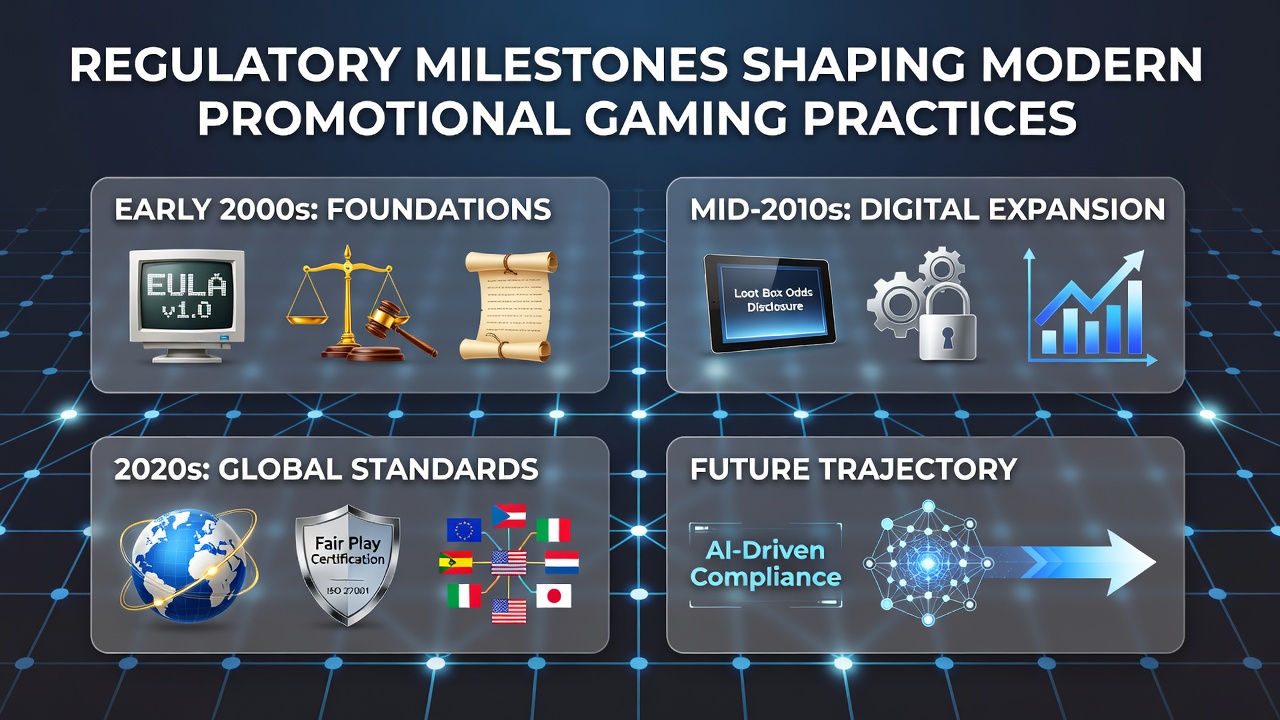
Promotional gaming practices have developed under layers of legal oversight that stretch back more than a century, with each major statute or ruling adding new requirements for disclosure, eligibility, and prize structures. Early rules in the United States emerged from postal regulations that treated certain contests as lotteries, while European jurisdictions imposed separate controls on public games of chance during the same period. Those foundational measures established the pattern of requiring no-purchase-necessary entry methods and clear advertising language that still governs many campaigns today.
Early 20th Century Foundations
Statutes passed in the 1920s and 1930s in several American states defined the difference between permissible skill-based promotions and prohibited lotteries, forcing marketers to publish official rules and avoid tying entry to product purchases. Similar distinctions appeared in Canadian provincial laws around the same time, where competition bureaus began reviewing advertising copy for hidden purchase requirements. Observers note that these early statutes created the template for modern “free to enter” mechanisms that separate promotional gaming from regulated gambling products.
Digital Transition and New Requirements
The arrival of online entry forms in the late 1990s prompted fresh scrutiny, because regulators had to decide whether websites counted as interstate commerce subject to older mail-and-telephone rules. Data from the Federal Trade Commission shows that enforcement actions against undisclosed terms rose sharply between 2000 and 2005, leading companies to adopt standardized privacy notices and age-verification steps. At the same time, the European Union’s distance-selling directives introduced cooling-off periods and mandatory contact information that promotional operators had to embed in every digital campaign.
Global Variations After 2010
Australian state gaming authorities tightened rules on instant-win promotions in 2012, requiring independent audits of random-number generators used in online draws. Canadian federal guidance issued in 2015 clarified that loyalty-program points could not be marketed as cash equivalents without separate licensing. In Asia, Singapore’s regulatory body introduced strict caps on prize values for social-media contests, while Japan updated its premium-labeling law to cover digital goods awarded through mobile apps. These regional differences forced multinational brands to maintain separate compliance checklists for each market.
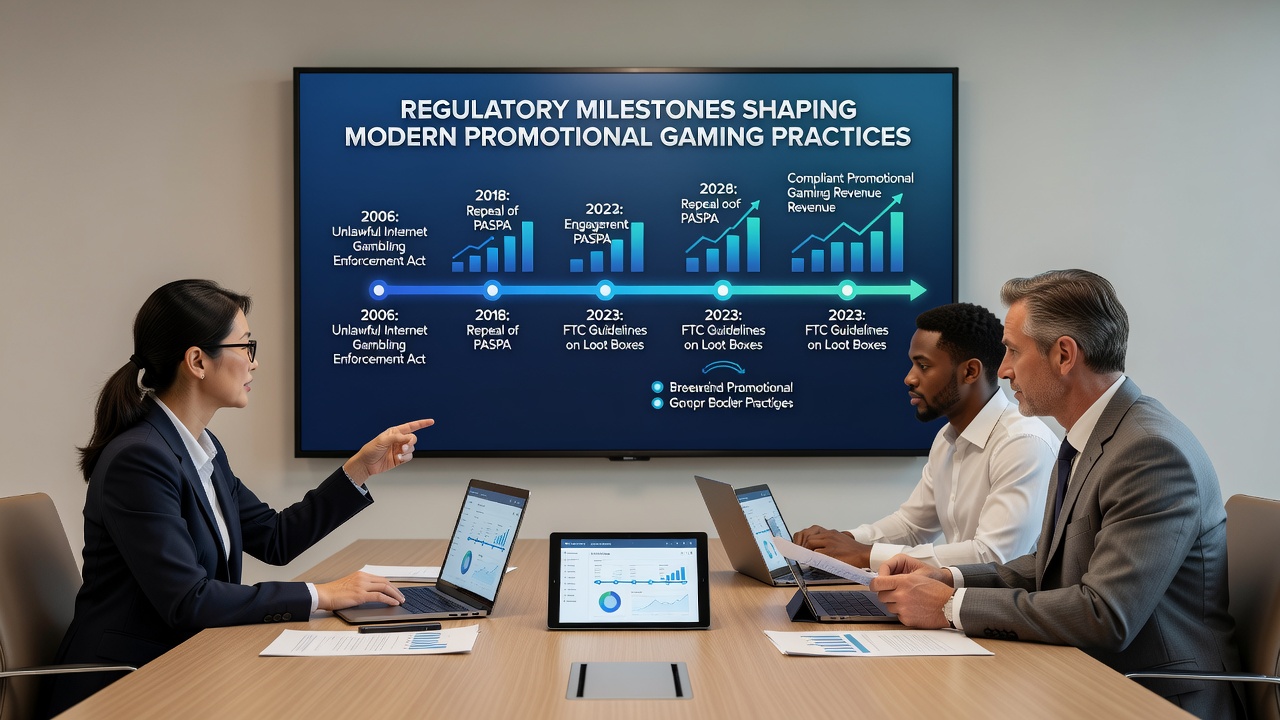
Research published by the International Center for Gaming Regulation indicates that after 2018 the number of cross-border enforcement cases increased because social platforms made it easier for residents of restricted jurisdictions to access foreign promotions. Companies responded by adding geo-blocking technology and requiring entrants to confirm their location at the point of entry. That technical adjustment became standard practice once several national data-protection agencies began fining operators for collecting addresses from ineligible regions.
Developments Approaching September 2026
Regulatory calendars show that new Canadian anti-spam amendments scheduled for September 2026 will expand disclosure obligations for any promotional message delivered through messaging apps or in-game notifications. Parallel proposals in Australia’s federal parliament would require real-time reporting of prize-pool changes for ongoing contests. Industry associations have already circulated draft templates that combine the new location-verification rules with existing privacy standards, allowing operators to update their platforms in a single code release rather than multiple patches.
Operational Adjustments Across the Sector
Those who manage large-scale campaigns now maintain dedicated compliance teams that track legislative dockets in every jurisdiction where entries are accepted. Software platforms used for random selection must carry certification seals from accredited testing labs, and marketing departments receive quarterly briefings that summarize enforcement trends. Figures released by the National Association of Sweepstakes and Promotions reveal that average legal-review time per campaign has grown from two days in 2015 to nearly seven days in 2025, reflecting the cumulative weight of layered requirements.
Conclusion
The sequence of statutes, directives, and enforcement actions has produced a fragmented yet increasingly standardized environment for promotional gaming. Each milestone added specific obligations around transparency, eligibility, and data handling, and operators continue to adapt their systems ahead of the September 2026 updates in Canada and Australia. The resulting framework balances consumer protection with commercial flexibility, supported by technical tools that verify compliance at scale.